You Can’t Secure What You Can’t See: The Role of ITAM in Cyber Resilience

 Why Asset Visibility Has Become an Existential Issue for SMBs
Cybersecurity conversations often start with tools: firewalls, EDR, SIEM, vulnerability scanners. But for many small and mid-sized businesses (SMBs), breaches don’t happen because they lack tools – they happen because those tools are operating without visibility.
In the U.S., 53% of IT teams lack complete visibility into their technology assets, and the average organization operates with a staggering 9:1 ratio of unknown to known cloud services. For SMBs facing rising attack frequency and limited internal resources, this visibility gap isn’t just inefficient – it’s dangerous .
Cyber resilience starts with a simple truth: you cannot secure what you cannot see.
The Visibility Crisis: Why Most Organizations Overestimate Asset Awareness
Many organizations believe they have a solid handle on their environments until an incident or audit proves otherwise.
The research shows:
- 53% of IT teams struggle to maintain full asset visibility
- Confidence drops sharply for modern environments:
- Only 54% feel confident in SaaS visibility
- Just 19% feel confident in BYOD visibility
- The average company tracks 108 known cloud services, while 975 additional services operate outside IT awareness
This gap creates blind spots that attackers actively exploit.
The Shadow IT Multiplier
Shadow IT is no longer edge-case behavior. Among SMBs:
- 57% experience high-impact shadow IT
- 76% say shadow IT directly threatens security
- Usage increased 59% with remote work
- 54% of IT teams say shadow IT significantly increases breach risk
When employees introduce tools, devices, and workflows outside formal oversight, security teams lose the ability to enforce controls, monitor behavior, or document compliance.
Why the Stakes Are Higher for SMBs
For large enterprises, breaches are costly. For SMBs, they are often fatal.
U.S.-specific data shows:
- 43% of cyberattacks target small businesses
- Average breach costs range from $120,000 to $1.24 million
- 60% of SMBs that suffer a cyberattack shut down within six months
- Only 14% of small businesses are adequately prepared for cyber threats
Despite these risks, many SMBs still treat ITAM as administrative overhead rather than a survival strategy.
How ITAM Reduces Attack Surface and Speeds Incident Response
Asset visibility doesn’t just improve reporting – it changes outcomes.
Organizations with mature ITAM programs:
- Reduce incident response times by up to 50%
- Achieve faster threat detection and containment
- Lower annual incident costs by as much as 45%
When an incident occurs, ITAM ensures teams know:
- What asset is affected
- How critical it is
- What data it touches
- How it connects to other systems
Without this context, response becomes guesswork, and guesswork costs time, money, and trust.
The Compliance Connection: Turning Asset Intelligence into Evidence
For SMBs in regulated industries, asset visibility is inseparable from compliance.
Frameworks and regulations, including NIST CSF, CIS Controls, and CMMC, all start with asset identification and classification. Without an accurate inventory:
- Audit preparation becomes reactive
- Documentation is inconsistent
- Evidence must be recreated under pressure
Organizations with strong asset visibility are 2.5 times more likely to effectively communicate cyber risk to leadership and boards – a critical advantage as oversight expectations increase.
ITAM systems also create:
- Automated audit trails
- Time-stamped, tamper-resistant logs
- Clear documentation of asset changes across the lifecycle
This turns compliance from a scramble into a byproduct of daily operations.
Why Siloed Security Tools Fail Without Asset Context
Most organizations haven’t underinvested in security – they’ve overcomplicated it.
The research shows:
- Organizations run an average of 25-40 security tools
- 78% say tool sprawl makes threat mitigation harder
- 77% report it hinders detection
- 81% report higher overall costs
Without ITAM, security tools lack context. Alerts arrive without clarity on whether the affected system is mission-critical or inconsequential. Analysts are forced to manually correlate signals, which slows their response and increases fatigue.
ITAM provides the context layer that every security tool depends on.
How MSSPs Add Leverage Through Lifecycle Integration
SMBs face disproportionate cyber risk but lack enterprise-scale teams. This is where a strategic MSSP model changes the equation.
By integrating:
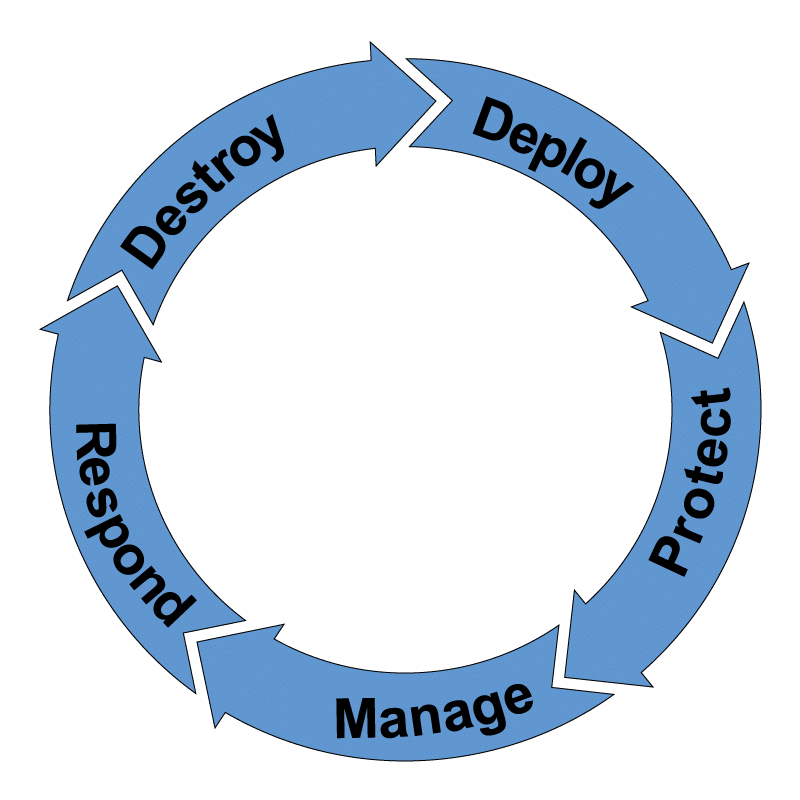
- ITAM (what exists)
- Security monitoring (what’s happening)
- IT Asset Disposition (ITAD) (what’s retired)
MSSPs deliver:
- End-to-end lifecycle accountability
- Reduced attack surface
- Audit-ready documentation
- 24/7 monitoring with real asset context
For SMBs, this means enterprise-grade resilience without enterprise complexity.
The Leadership Takeaway: Turn Visibility Gaps Into a Resilience Plan
Cyber resilience doesn’t start with another tool. It starts with visibility.
Resilience360 helps SMB leaders in regulated industries understand their external cyber exposure, asset visibility gaps, and trust risks in a clear, executive-friendly format.
In a 30-45 minute session, we provide insight into your organization’s current standing and how to move forward with confidence.
NAID AAA Certification
Certified for:
Plant-Based Computer Media & SSD Destruction-Physical & Sanitization
Mobile Computer Media Destruction-Physical
Click to learn more about how we are indemnified by:

Click to learn more about our partnership:

Click to verify our protection from data security breaches & fraud:

Click to view our security score on SecurityScorecard:
Click to view our SOC 2 Type 1 Certificate of Completion:

Click to learn more about our membership: