What Type of Data Is This? Teaching Employees to See PHI, PCI, and PII in Their Daily Work

 Data classification is often treated as a technical or compliance exercise. Policies define categories such as Public, Internal, Confidential, and Restricted. Risk matrices are created. Systems are labeled.
However, in practice, classification decisions are made by employees.
When a staff member exports a spreadsheet, forwards an email, uploads a file to a collaboration platform, or pastes information into an AI tool, they are effectively classifying data in that moment.
In 2025, U.S. data compromise incidents reached a record 3,332. Two-thirds involved Social Security numbers. Approximately one-third involved bank account information or driver’s license numbers.
These are not abstract statistics. They represent PHI, PCI, and PII being mishandled in routine workflows.
In most organizations, employees constantly interact with sensitive information throughout the day. Customer records, patient information, financial documents, identification numbers, and internal reports are shared via email threads, spreadsheets, chat platforms, and collaborative workspaces. Each interaction creates a moment when the employee must decide how to handle that information.
When those decisions are unclear, mistakes happen.
Why Classification Must Be Operational
Gartner estimates that 65% of the global population will have their PII covered by privacy regulations by 2025. Regulatory exposure continues to expand.
NIST’s SP 1800-39 emphasizes the importance of classifying unstructured data and mapping classification decisions to where data is stored and used. This is particularly relevant because most of the data employees handle daily is unstructured.
Structured databases are typically controlled. Risk emerges in email threads, exported reports, shared documents, and AI prompts.
Unstructured information moves quickly through everyday workflows. A report may begin inside a secure system but later be exported into a spreadsheet. A spreadsheet may be attached to an email. That email may be forwarded to another team member or downloaded to a local device. Each step changes how that data is protected.
Without clear recognition of what type of data is being handled, employees cannot make safe decisions about where it should be stored, shared, or transmitted.
Mapping Business Tiers to Regulatory Reality
Most organizations rely on four business classification tiers:
- Public
- Internal
- Confidential
- Restricted
These align closely with NIST’s Low, Moderate, and High Impact framework under the CIA model.
For regulated SMBs, practical mapping often looks like this:
- PHI under HIPAA typically aligns with High Impact and Restricted
- Cardholder data under PCI DSS is High impact and tightly controlled
- PII under privacy laws may fall into Confidential or Restricted, depending on sensitivity
Employees must be able to recognize these distinctions instantly.
In many organizations, classification policies exist but remain disconnected from day-to-day workflow. Employees may understand that certain information is sensitive but lack clarity about where the boundaries lie between the Internal, Confidential, and Restricted categories.
Closing that gap requires translating policy language into practical examples that employees encounter every day.
Where Misclassification Happens
Classification mistakes rarely occur because employees ignore policy. They occur because employees do not recognize risk in context.
Common breakdown points include:
- Exporting regulated reports for convenience
- Forwarding spreadsheets to personal email
- Sharing client data in chat tools
- Uploading sensitive documents to AI platforms
- Copying structured data into unstructured formats
Notably, 43% of workers admit to pasting sensitive work information into AI tools, often without recognizing exposure risk.
In each case, the employee is making a real-time classification decision.
These decisions rarely feel like security events in the moment. They feel like routine workflow. A document is shared to complete a task faster, information is copied into another system to generate an analysis, or a quick question is asked through an AI tool.
However, each of those steps changes the information’s exposure level.
Teaching Recognition, Not Just Policy
Effective data governance requires behavioral clarity.
Employees should be trained to pause and ask:
- What type of data is this?
- Who would be harmed if it were exposed?
- Where is this data being stored or transmitted?
- Does this platform meet the classification requirement?
SAT360 embeds these recognition patterns through realistic, role-specific scenarios. Healthcare staff see PHI-based use cases. Financial employees encounter PCI examples. Education and accounting teams work through PII exposure simulations.
This approach shifts classification from abstract policy to practical judgment.
Training that reflects real workflow situations helps employees recognize risk earlier. Instead of reacting after a mistake occurs, they begin to identify sensitive information before it is shared or moved.
Over time, this recognition becomes part of normal decision-making rather than a separate security step.
Connecting Data to Systems Through ITAM
Awareness must be reinforced by infrastructure mapping.
IT Asset Management enables leadership to:
- Identify which systems store PHI, PCI, or PII
- Track where exports are generated
- Align access controls with classification tiers
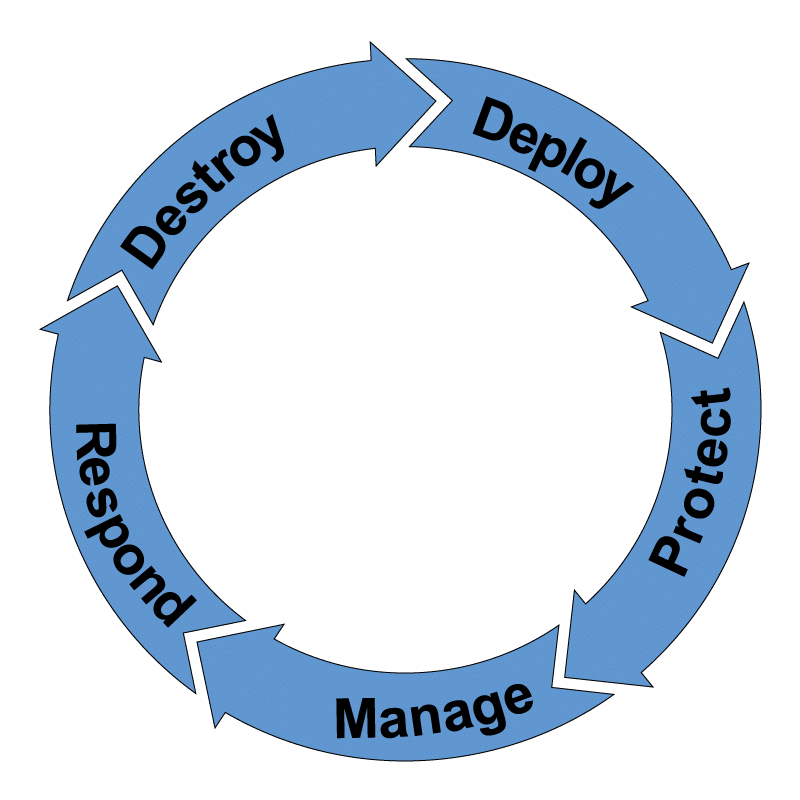
- Monitor lifecycle transitions and disposal
Classification decisions must connect to where data lives.
When organizations understand exactly where sensitive data resides, they can apply protections more effectively. Systems handling high-impact data can receive stronger controls, monitoring, and governance.
Resilience360 adds the external lens, revealing whether classified systems or exposed services present visible risk.
This outside-in perspective helps leadership understand how sensitive systems appear to attackers, regulators, and insurers.
From Awareness to Governance Alignment
Data classification cannot remain an internal compliance checklist. It must become an operational discipline.
Leadership should ensure:
- High-risk data types are mapped to systems via ITAM
- Classification tiers are explained in operational language
- Employees receive scenario-based reinforcement
- External exposure is reviewed periodically
Map your highest-risk data types to systems via ITAM, then use SAT360 to teach employees how to recognize and handle them correctly in real-world workflows.
In regulated SMBs, classification is not theoretical. It is a daily decision made thousands of times across the organization.

NAID AAA Certification
Certified for:
Plant-Based Computer Media & SSD Destruction-Physical & Sanitization
Mobile Computer Media Destruction-Physical
Click to learn more about how we are indemnified by:

Click to learn more about our partnership:

Click to verify our protection from data security breaches & fraud:

Click to view our security score on SecurityScorecard:
Click to view our SOC 2 Type 1 Certificate of Completion:

Click to learn more about our membership: